After a collision, one of the most important decisions you’ll face is what type of replacement parts will be used to repair your vehicle. This choice between OEM (Original Equipment Manufacturer) parts and aftermarket parts can significantly impact your car’s safety, performance, resale value, and even how well the repair holds up over time. As Salem’s trusted collision repair center for nearly 50 years, Dabler Auto Body is committed to helping our customers understand their options and make informed decisions about their vehicle repairs.
What Are OEM Parts?
OEM stands for Original Equipment Manufacturer. These are parts made by the same company that manufactured your vehicle’s original components. When you drive a Toyota, Honda, Ford, or any other make, OEM parts come directly from that manufacturer and are designed to match the exact specifications of your vehicle.
Think of it this way: OEM parts are identical to what came on your car when it rolled off the factory floor. They’re built to the same quality standards, use the same materials, and are engineered to fit perfectly with your vehicle’s other components.
Benefits of OEM Parts
- Perfect Fit: OEM parts are designed specifically for your vehicle’s make and model, ensuring precise alignment without modifications.
- Consistent Quality: Manufactured under strict quality control standards set by the automaker.
- Maintains Safety Standards: Designed to work seamlessly with your vehicle’s safety systems, including airbags and crumple zones.
- Preserves Resale Value: Vehicles repaired with OEM parts typically maintain higher resale values.
- Warranty Coverage: Many OEM parts come with manufacturer warranties.
What Are Aftermarket Parts?
Aftermarket parts are manufactured by third-party companies, not your vehicle’s original manufacturer. These companies reverse-engineer parts to function similarly to the originals, often designing them to fit multiple makes and models. The aftermarket parts industry is vast, with quality ranging from excellent to poor depending on the manufacturer.
Potential Benefits of Aftermarket Parts
- Lower Cost: Generally less expensive than OEM parts.
- Wider Availability: Often easier to obtain quickly from multiple suppliers.
- More Options: Multiple manufacturers offer varying quality levels and price points.
Potential Drawbacks of Aftermarket Parts
- Inconsistent Quality: Quality varies significantly between manufacturers.
- Fit Issues: May require modifications or adjustments during installation.
- Safety Concerns: May not meet the same safety standards as OEM components.
- Reduced Resale Value: Can negatively impact your vehicle’s value.
- Limited or No Warranty: Many aftermarket parts lack comprehensive warranty coverage.
Why Part Quality Matters in Collision Repair
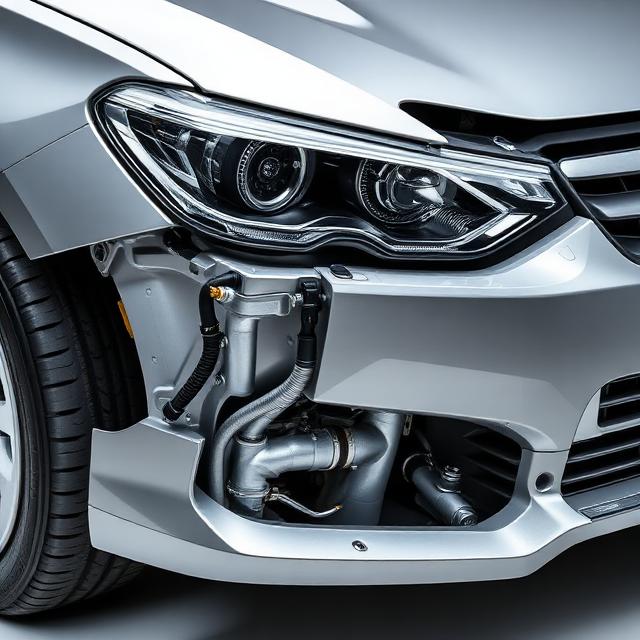
Modern vehicles are engineering marvels, with every component designed to work together as an integrated system. This is especially true when it comes to safety. Your car’s crumple zones, airbag deployment timing, and structural integrity all depend on parts meeting precise specifications.
Safety Considerations
When a vehicle is designed, engineers calculate exactly how each component should respond in a collision. The front bumper, fender, and hood are all designed to absorb and distribute impact energy in specific ways. When aftermarket parts don’t match these exact specifications, they can potentially alter how your vehicle performs in a subsequent accident.
At Dabler Auto Body, we’ve seen cases where poorly fitting aftermarket parts created gaps that affected airbag sensor placement or changed how impact energy traveled through the vehicle’s frame. These aren’t just cosmetic concerns—they’re safety issues that could affect you and your family.
Fit and Finish
Beyond safety, part quality affects how your repaired vehicle looks and functions. OEM parts are designed with precise tolerances, ensuring that body panels align perfectly, doors close smoothly, and paint matches seamlessly. Aftermarket parts sometimes require additional labor to modify or adjust, which can add time to your repair and still result in less-than-perfect alignment.
Our technicians at Dabler Auto Body use state-of-the-art equipment, including our Vector computerized measuring system, to ensure every repair meets factory specifications. When parts don’t fit precisely, achieving these specifications becomes significantly more challenging.
What Your Insurance Company May Not Tell You
Here’s something many Salem drivers don’t realize: insurance companies often prefer aftermarket parts because they cost less. This helps insurance companies minimize claim payouts. While this might sound reasonable from a cost perspective, it’s important to understand what you might be giving up.
Most standard auto insurance policies default to aftermarket parts unless you’ve purchased specific OEM parts coverage. Some policies may use language like “like kind and quality” or “LKQ” parts, which typically means aftermarket or used parts will be used for your repair.
Your Rights as a Consumer in Oregon
Oregon law protects your right to choose your own repair facility. Your insurance company cannot require you to use a specific body shop, even if they recommend one. Additionally, you have the right to request OEM parts for your repair, though you may be responsible for the cost difference if your policy doesn’t cover them.
If OEM parts are important to you, consider these options:
- Review your current policy to understand your parts coverage
- Ask your insurance agent about OEM parts endorsements
- When filing a claim, specifically request OEM parts
- Work with a reputable body shop that will advocate for quality repairs
When Aftermarket Parts Might Be Acceptable
While we generally recommend OEM parts for collision repairs, there are situations where quality aftermarket parts may be appropriate:
- Older Vehicles: For vehicles over 10 years old where OEM parts may be difficult to find or cost-prohibitive.
- Non-Structural Components: Items like mirrors, door handles, or trim pieces that don’t affect safety.
- Certified Aftermarket Parts: Some aftermarket parts are certified to meet or exceed OEM specifications.
The key is working with a knowledgeable collision repair center that can help you evaluate your options based on your specific vehicle, the nature of the damage, and your priorities.
Dabler Auto Body’s Commitment to Quality
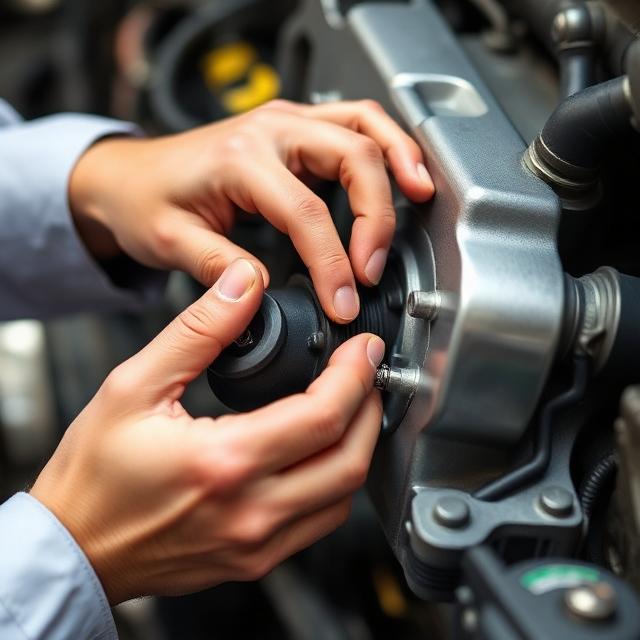
At Dabler Auto Body, we’ve built our reputation over nearly 50 years on quality craftsmanship and honest service. We believe in using the best parts available to restore your vehicle to its pre-accident condition—not just in appearance, but in safety and performance as well.
Our approach to parts selection includes:
- Transparent Communication: We explain your parts options clearly and help you understand the differences.
- Insurance Advocacy: We work with your insurance company to request quality parts for your repair.
- Expert Recommendations: Our ASE certified technicians provide guidance based on your vehicle and repair needs.
- Quality Assurance: Every repair is backed by our Unlimited Lifetime Warranty.
Questions to Ask Your Collision Repair Shop
When choosing a body shop for your collision repair in Salem, don’t be afraid to ask questions about parts. A reputable shop will be happy to discuss their approach. Consider asking:
- What type of parts do you typically use for repairs?
- Will you use OEM parts if I request them?
- Can you provide a detailed estimate showing which parts will be used?
- What warranty do you offer on parts and labor?
- Will you work with my insurance company to request OEM parts?
- Are your technicians certified to work on my vehicle make?
Making the Right Choice for Your Vehicle
Ultimately, the decision between OEM and aftermarket parts depends on your priorities, your vehicle, and your budget. For newer vehicles, luxury cars, and any repair involving structural or safety components, we strongly recommend OEM parts. The peace of mind knowing your vehicle has been restored to factory specifications is worth the investment.
For Salem drivers who value quality, safety, and long-term vehicle value, understanding the difference between OEM and aftermarket parts is essential. Don’t let anyone pressure you into accepting parts that compromise your vehicle’s integrity. You have rights as a consumer, and you deserve a repair that truly restores your vehicle to its pre-accident condition.
Get Expert Guidance from Dabler Auto Body
If you’ve been in an accident and have questions about your repair options, the team at Dabler Auto Body is here to help. As Salem’s I-CAR Gold Class certified collision center, we bring the expertise and experience needed to guide you through the repair process. We’ll explain your options, advocate with your insurance company, and ensure your vehicle is repaired to the highest standards.
Contact us today at (503) 585-8066 or visit us at 1465 Sunnyview Rd NE, Salem, OR 97301 for a free estimate. We’re open Monday through Friday, 8:00 AM to 5:00 PM, and we look forward to showing you why Salem drivers have trusted Dabler Auto Body for nearly five decades.
Remember: Quality parts and quality repairs go hand in hand. When your safety is on the line, don’t settle for less than the best.